

-
Trainingarrow_drop_down
- About Training
-
Internationalarrow_drop_down
- About International
- Produce Safety Alliance Grower Training
- Good Fishing Vessel Practices
- Aquaculture Training Programs
- Good Agricultural Practices
- Commercially Sterile Packaged Foods
- Food Inspector Training
- Supply Chain Management for Spices and Botanical Ingredients
- WTO-SPS Professional Development
- Training Data
-
Collaborationsarrow_drop_down
- About Collaborations
-
International Collaborationsarrow_drop_down
- About International Collaborations
- About Collaborative Training Initiatives
- Collaborative Produce Safety Training Initiative
- Bangladesh Aquatic and Aquacultural Food Safety Center
- IICA-JIFSAN Collaborative Training Initiative for the Americas
- India Supply Chain Management for Spices and Botanical Ingredients (SCMSBI)
- Malaysia Ministry of Health Collaborative Framework on Food Safety Capacity Building
- Thailand Center for Commercially Sterile Packaged Foods
- About
- News & Events
- Training
- Research
-
Collaborations
-
International Collaborations
- About Collaborative Training Initiatives
- Collaborative Produce Safety Training Initiative
- Bangladesh Aquatic and Aquacultural Food Safety Center
- IICA-JIFSAN Collaborative Training Initiative for the Americas
- India Supply Chain Management for Spices and Botanical Ingredients (SCMSBI)
- Malaysia Ministry of Health Collaborative Framework on Food Safety Capacity Building
- Thailand Center for Commercially Sterile Packaged Foods
- Partnerships
-
International Collaborations
- Informatics
Background
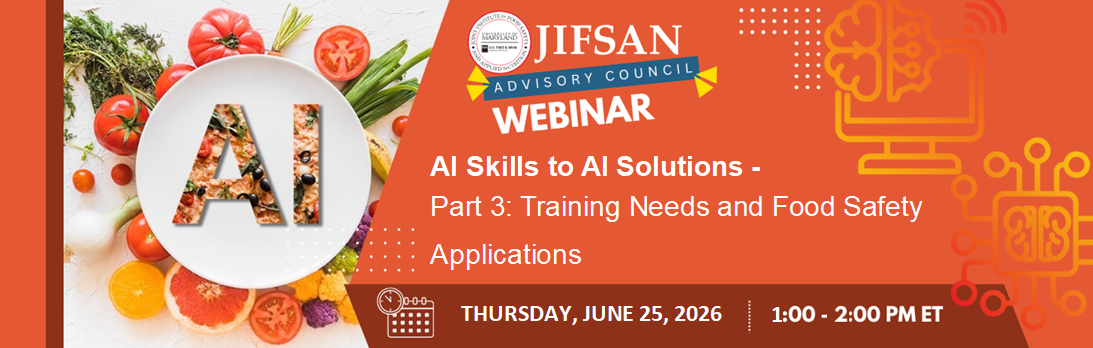
The explosion of new AI tools available to the general public and commercial organizations have unleashed exciting potential applications that were previously not feasible. Not only has there been a rapid increase in the number of available tools over the past few years but also in the pace of change and capabilities of these tools. This means that as we embrace AI in our professional work, we will also need to be flexible and willing to constantly evolve. We also need to ensure that we’re training the next wave of scientists so that they have the appropriate awareness and understanding to effectively utilize these tools. The first talk will explore views on the training needs, opportunities, and challenges involved with educating and preparing students in life/health/agricultural/food science programs to understand the types of AI tools available and to gain awareness of the potential utility within areas such as food safety and nutrition. This will be followed by examples in food safety where AI tools were used to support microbiological risk assessment and the discovery of foodborne pathogen sources. This webinar is part of an ongoing series on AI in food safety and nutrition leading to the JIFSAN Fall Symposium “From Data to Decisions: AI Transforming Food Safety and Nutrition”.
Speakers
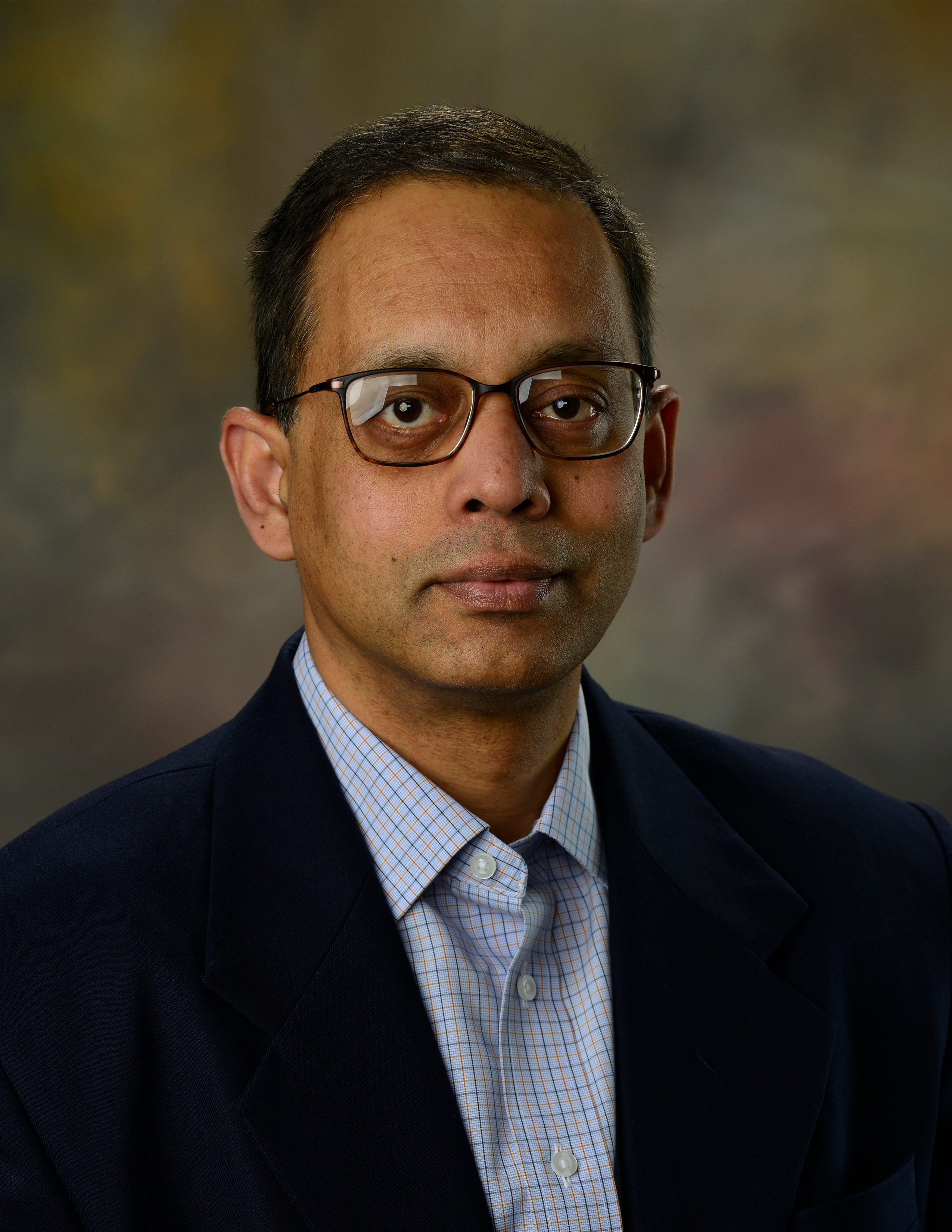
Dr. Puneet Srivastava
Presentation: AI in Education at AGNR
Download Presentation
Dr. Puneet Srivastava serves as the Associate Dean for Research and Associate Director of the Maryland Agricultural Experiment Station in the College of Agriculture and Natural Resources at the University of Maryland. In this role, he oversees the College's research portfolio and manages outstate agricultural research and education centers. Before joining the University of Maryland in 2020, he served as Director of the Water Resources Center, the Butler-Cunningham Eminent Scholar in Agriculture and the Environment in the College of Agriculture, and a Professor in the Biosystems Engineering Department at Auburn University. Dr. Srivastava holds a Ph.D. from Pennsylvania State University in agricultural and biological engineering with a minor in computer science and engineering, and an M.S. in agricultural and biological engineering from the University of Arkansas.
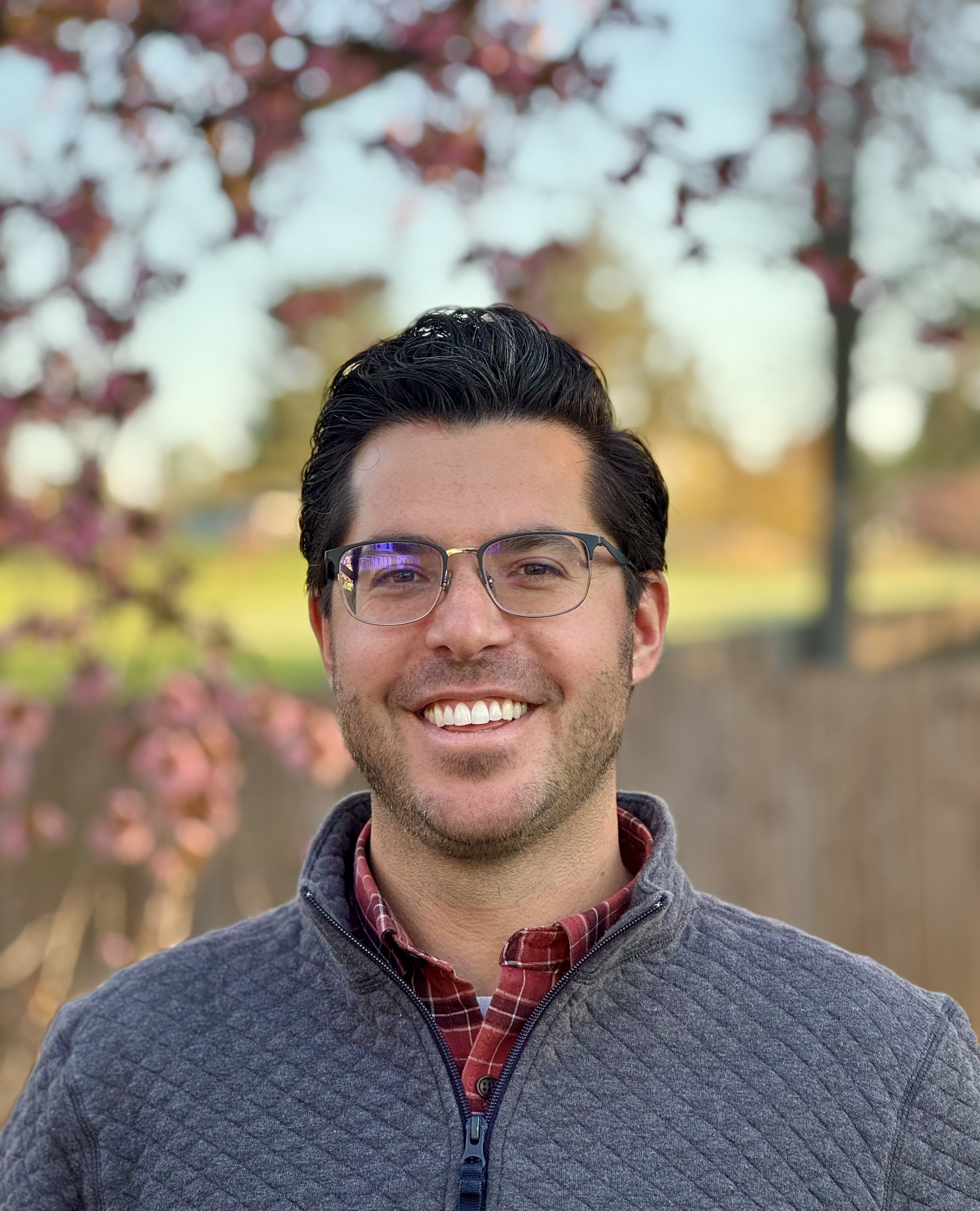
Dr. Ryan Blaustein
Presentation: AI Skills to Solutions: Training Needs and Food Safety Applications
Download Presentation
Dr. Blaustein is an Assistant professor in the Department of Nutrition and Food Science at the University of Maryland (UMD). His research and teaching program in food microbiology integrates applied and computational approaches to advance food safety. His lab investigates the ecology and evolution of foodborne pathogens, with a focus on the spread of antimicrobial resistance, and develops biologically inspired strategies to enhance sustainable crop production and fermentation systems. Increasingly, this work incorporates AI and machine learning to better understand microbial behavior in complex food systems. Dr. Blaustein previously earned his B.S. and M.S. from UMD, while working at the USDA-ARS, and his Ph.D. from the University of Florida. He completed postdoctoral training at Northwestern University and the National Institutes of Health.